Private vs. State Disability Insurance: Which One Actually Protects You?
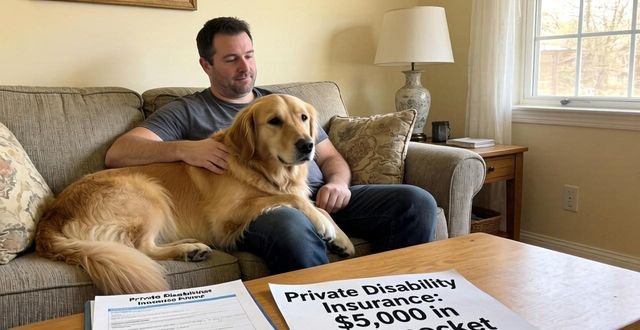
The alarm didn’t go off.
You wake up with a stiff back. Not the “I slept wrong” kind. The kind that says something is really wrong.
You have a mortgage due in 12 days.
Your kid’s private school tuition hits the bank account on the 1st.
And your savings? Let’s be real. It’s three months of ramen-level survival.
This is the moment you realize disability insurance isn’t a “nice to have.” It’s the wall between you and the street.
So you start looking.
And boom. You hit the big question. Private vs. State.
What’s the real difference? Which one saves your ass?
Here is where things get real.
State Disability Insurance (SDI).
Only five states have it. California. New York. New Jersey. Rhode Island. Hawaii. Plus Puerto Rico.
If you don’t live there? Stop reading this section. It doesn’t apply to you.
If you do live there? Here is the catch you need to hear.
State plans take money from your paycheck. Automatic. You don’t have a choice.
They pay you if you get hurt or sick outside of work. Car accident? Yes. Cancer? Yes. Back injury from lifting your kid? Yes.
But here is the part they don’t tell you.
The benefit is tiny.
California gives you about 60% to 70% of your wages. But there is a max. In 2026, that max is around $1,800 a week.
Sounds okay? Do the math.
If you make $150,000 a year? You hit that max. Your actual replacement rate drops to 45%. Maybe less.
And here is the killer.
It’s taxable.
If your employer paid the SDI premium? You pay federal tax on every dollar you get.
Wait. Did you think that money was tax-free? Nope.
So you take 45% of your income. Then you remove 20% for taxes. You are now living on 36% of what you used to make.
Try paying a $4,000 mortgage on that.
You can’t.
Private Disability Insurance.
This is the wild west. Good plans. Bad plans. Ugly plans.
The good ones do something state plans can’t.
They replace 60% to 70% of your real income. Not capped at $1,800 a week. Capped at $20,000 a month or more.
You pick your elimination period. 30 days. 60 days. 90 days. Longer waiting period = lower premium.
You pick your benefit period. 2 years. 5 years. To age 65.
You want “own occupation” coverage? That means if you can’t do your specific job, they pay. Even if you can work at McDonald’s.
State plans don’t give you that.
But there is a catch.
Private insurance is expensive.
A good plan for a 35-year-old professional? 2% to 4% of your annual income. For a surgeon or a lawyer? Higher.
And they ask questions. Your medical history. Your hobbies. Your family history.
They can say no.
Here is where people get confused.
They think, “I have state disability. I’m fine.”
Or they think, “Private insurance is a scam. I’ll just use my savings.”
Both are wrong.
Let me show you why.
The tax trap nobody explains.
State disability premiums paid by your employer? Taxable benefits.
Private disability premiums paid by you? Tax-free benefits.
Read that again.
If you write the check for your private policy, every dollar you get is yours. No federal tax. No state tax.
That is massive.

A $5,000 monthly benefit from a private policy is $5,000 in your pocket.
A $5,000 monthly benefit from a state plan is about $4,000 after taxes.
That difference over three years? $36,000.
You tell me if that matters.
The Group coverage lie.
Your employer offers short-term and long-term disability. You sign up because it’s cheap.
Here is the truth.
Group plans have caps. Usually $5,000 or $10,000 a month. If you make $200,000? You lose more than half your income.
Group plans are almost always taxable. Because your employer pays the premium.
Group plans can change. Your employer switches carriers? Your coverage changes. You lose your job? You lose your coverage.
Private individual policies follow you. Forever. As long as you pay the premium.
The biggest mistake people make.
They wait.
“I’m healthy. I don’t need this.”
Then they get a diagnosis. Back injury. Anxiety disorder. Cancer.
Now they can’t buy coverage. Or they can buy it but with an exclusion. “We’ll cover everything except your back.” Or “We’ll cover everything except mental health.”
That exclusion stays forever.
Here is another mistake.
They think workers’ comp covers everything.
Workers’ comp only covers injuries at work. Fall off a ladder at home? Not covered. Get into a car accident on Saturday? Not covered. Get sick with long COVID? Not covered.
Workers’ comp is not disability insurance.
So what do you actually do?
Step one. Check if you live in a state with SDI.
If no. You need private insurance. End of story.
If yes. Look at your income.
Make under $80,000 a year? State plan might be enough. It’s not great. But the cost of private might hurt more than the benefit helps.
Make over $80,000 a year? You need a private policy to stack on top of state.
Here is how that works.
State pays you $1,800 a week. Private policy pays you the difference to get you to 60% of your income.
You buy a private policy with a 90-day elimination period. State covers the first 90 days. Private kicks in after. That lowers your premium.
You structure it so the total payout matches your real need.
Step two. Check if your employer offers group coverage.
If yes. Take it. But buy a private policy to fill the gap.
You layer them. Group coverage covers the first $5,000. Private covers the next $5,000.
Step three. Run the numbers.
Your monthly expenses. Mortgage, food, insurance, utilities, kid stuff.
Multiply by 12. That is your annual need.
Take away your spouse’s income. Take away any state benefits. The difference is what private insurance must cover.
Step four. Pick your elimination period.
30 days is expensive. 90 days is cheaper.
Do you have an emergency fund? If yes,take 90 days. Use your savings to bridge the gap. Save 30% on your premium.
No emergency fund? Take 60 days. Pay more. But you won’t go broke waiting for benefits.
The bottom line.
State disability is a safety net with holes in it.
Private insurance is the patch.
You don’t have to choose one or the other. Smart people use both.
But here is the question you need to sit with.
If you got hurt tomorrow. Could you pay your mortgage in three months?
If the answer is no. You know what to do.
Stop reading. Call an independent agent. Get quotes from Guardian, Principal, and Ameritas.
Do it today.
Because the back pain doesn’t send a calendar invite.

What is Disability Insurance?
Disability insurance is a vital policy designed to protect your income if you’re unable to work due to an illness or injury. It’s crucial for ensuring that you can continue to meet your financial obligations while focusing on your recovery. Without this income protection, unexpected health issues could lead to significant financial stress.
Types of Coverage Available
There are two primary types of disability insurance: short-term and long-term coverage. Short-term disability insurance typically provides benefits for a limited period, usually up to six months. In contrast, long-term disability insurance can extend for several years or even until retirement age. Understanding the differences in coverage can help you choose the best option for your situation.
Why You Need Disability Insurance
Many people underestimate the importance of disability insurance. Statistically, there’s a significant chance that an individual may become disabled at some point during their working life. With proper income protection, you won’t have to worry about losing your lifestyle or falling behind on bills. Investing in a comprehensive disability insurance policy today can provide you and your loved ones peace of mind for the future.
Latest Posts
- Top Disability Insurance Companies 2026 | The Realistic Guide for High Earners
- Title: Why Your Disability Claim Got Denied & How to Fix It

- Are You One Accident Away From a Student Loan Nightmare?

- Disability Insurance for Global Citizens: Your Income Follows You Everywhere

- Disability Insurance Claims: 5 Insider Tips to Get Your Benefits Approved
Leave a Reply