Short-Term vs Long-Term Disability Insurance: Benefits, Differences, and Use Cases Explained
Introduction: Why Understanding Disability Insurance Duration Matters
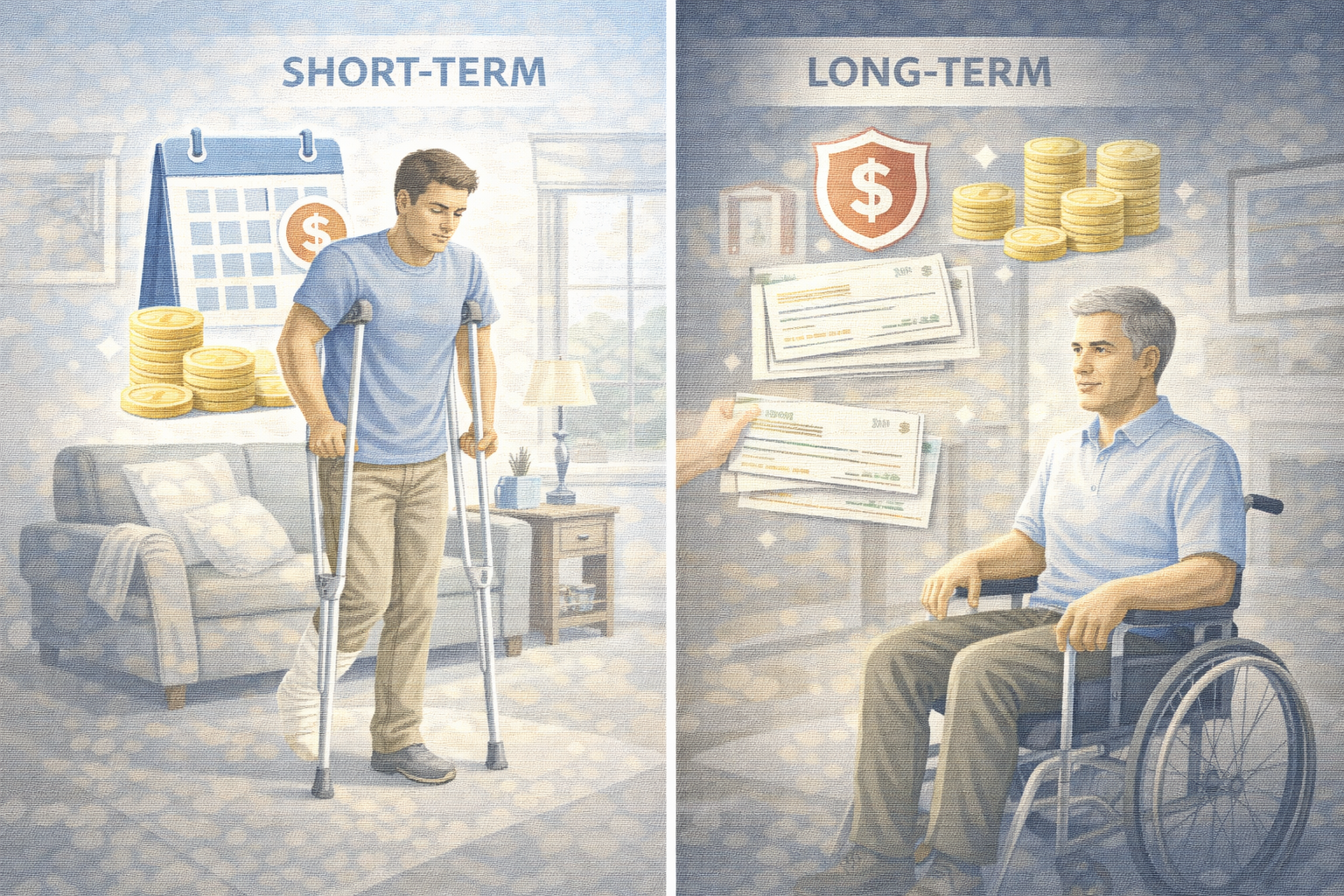
Disability Insurance is designed to protect income when illness or injury prevents an individual from working. However, not all disabilities follow the same timeline. Some conditions require only a few weeks of recovery, while others can last for years or permanently alter a person’s ability to work.
For this reason, disability insurance in the United States is typically divided into short-term disability insurance (STD) and long-term disability insurance (LTD). Understanding how these two forms of coverage differ—and how they work together—is essential for building a comprehensive income protection strategy.
This article provides a detailed comparison of short-term vs long-term disability insurance benefits explained in practical terms, helping professionals, employees, and self-employed individuals make informed coverage decisions.
What Is Short-Term Disability Insurance?
Short-term disability insurance provides temporary income replacement for a limited period following a qualifying illness or injury.
Typical Features of Short-Term Disability Insurance
Short-term disability insurance policies in the U.S. commonly include:
-
Benefit durations ranging from 3 to 6 months
-
Elimination periods as short as 7 to 14 days
-
Income replacement of 50% to 70% of pre-disability earnings
STD coverage is intended to address immediate income needs during short recovery periods.
What Is Long-Term Disability Insurance?
Long-term disability insurance provides extended income protection when a disability lasts beyond the short-term recovery phase.
Typical Features of Long-Term Disability Insurance
Long-term disability insurance policies generally offer:
-
Benefit durations of 2 years, 5 years, 10 years, or until retirement age
-
Elimination periods of 60 to 180 days
-
Monthly income replacement of 50% to 60%
LTD coverage is designed for serious or chronic conditions that prevent long-term employment.
Short-Term vs Long-Term Disability Insurance Benefits Explained
Understanding the core differences between short-term and long-term disability insurance helps clarify their respective roles in income protection.
Benefit Duration Comparison
-
Short-term disability insurance covers temporary disabilities lasting weeks or months.
-
Long-term disability insurance covers prolonged or permanent disabilities lasting years.
STD serves as immediate support, while LTD provides sustained financial protection.
Elimination Period Differences
Short-term disability insurance typically begins paying benefits quickly, sometimes within one or two weeks. Long-term disability insurance requires a longer waiting period, during which other resources or STD benefits may apply.
This structure allows the two policies to function together seamlessly.
Income Replacement Levels
While both STD and LTD replace a portion of income, short-term disability insurance often offers slightly higher replacement percentages. Long-term disability insurance prioritizes sustainability over extended durations.
Common Medical Conditions Covered by Each Policy
Short-Term Disability Insurance Coverage Examples
STD commonly covers:
-
Post-surgical recovery
-
Pregnancy and childbirth recovery
-
Minor injuries
-
Short-term illnesses
These conditions typically resolve within a predictable timeframe.
Long-Term Disability Insurance Coverage Examples
LTD commonly covers:
-
Cancer
-
Neurological disorders
-
Severe musculoskeletal injuries
-
Autoimmune diseases
-
Cardiovascular conditions
These conditions often involve extended treatment or permanent limitations.
Employer-Sponsored vs Individual Policies
Employer-Provided Disability Insurance
Many employers in the U.S. offer short-term and long-term disability insurance as part of benefits packages. While convenient, these plans often have limitations, including:
-
Lower benefit caps
-
Limited customization
-
Taxable benefits if employer-paid
Individual Disability Insurance Policies
Individually purchased disability insurance offers greater flexibility, including:
-
Customizable benefit periods
-
Stronger occupational definitions
-
Portability between jobs
Professionals with specialized skills often benefit most from individual coverage.
How Short-Term and Long-Term Disability Insurance Work Together
Rather than choosing between STD and LTD, many individuals benefit from having both.
Coordinated Coverage Example
-
Short-term disability insurance pays benefits during the first 3–6 months
-
Long-term disability insurance begins once STD benefits end
This coordination creates continuous income protection throughout the disability timeline.
Occupational Definitions and Their Impact
Long-term disability insurance often includes more complex occupational definitions, such as:
-
Own-occupation coverage, which protects the insured’s specific profession
-
Any-occupation coverage, which requires inability to work in any suitable job
Short-term disability insurance typically uses simpler definitions due to shorter durations.
Limitations and Exclusions to Consider
Both types of disability insurance may include exclusions such as:
-
Pre-existing condition limitations
-
Mental health benefit caps
-
Substance-related conditions
Understanding these exclusions is critical when evaluating coverage adequacy.
Which Type of Disability Insurance Is Right for You?
Employees
Employees may rely on employer-sponsored STD and LTD but should review coverage limits carefully.
High-Income Professionals
Professionals with high earnings may require supplemental individual LTD coverage to address benefit caps.
Self-Employed Individuals
Self-employed workers typically need individually purchased short-term and long-term disability insurance, as employer coverage is unavailable.
Cost Considerations
Short-term disability insurance is generally less expensive due to shorter benefit durations. Long-term disability insurance costs more but provides significantly greater financial protection.
Premium costs depend on:
-
Age
-
Occupation
-
Health history
-
Benefit length and amount
Why Long-Term Disability Insurance Is Often Overlooked
Many individuals underestimate the likelihood of long-term disability and overestimate the effectiveness of government programs. Long-term disability insurance addresses a gap that neither savings nor public benefits can adequately fill.
Key Takeaways: Building a Complete Disability Insurance Strategy
Disability Insurance is most effective when structured to address both short-term and long-term income risks. Short-term disability insurance provides immediate relief, while long-term disability insurance ensures financial stability for extended disabilities.
Understanding short-term vs long-term disability insurance benefits explained empowers individuals to select coverage that aligns with their income, career, and long-term financial goals.
In a labor market where income depends heavily on physical and cognitive ability, disability insurance remains one of the most important components of a resilient financial plan.

What is Disability Insurance?
Disability insurance is a vital policy designed to protect your income if you’re unable to work due to an illness or injury. It’s crucial for ensuring that you can continue to meet your financial obligations while focusing on your recovery. Without this income protection, unexpected health issues could lead to significant financial stress.
Types of Coverage Available
There are two primary types of disability insurance: short-term and long-term coverage. Short-term disability insurance typically provides benefits for a limited period, usually up to six months. In contrast, long-term disability insurance can extend for several years or even until retirement age. Understanding the differences in coverage can help you choose the best option for your situation.
Why You Need Disability Insurance
Many people underestimate the importance of disability insurance. Statistically, there’s a significant chance that an individual may become disabled at some point during their working life. With proper income protection, you won’t have to worry about losing your lifestyle or falling behind on bills. Investing in a comprehensive disability insurance policy today can provide you and your loved ones peace of mind for the future.
Latest Posts
- Is Disability Insurance Worth It in the United States? A Cost vs Risk Analysis

- Employer-Provided vs Individual Disability Insurance Coverage: What Works Best in the United States?
- Disability Insurance Eligibility Requirements in the United States: Who Qualifies and Why
- How Much Disability Insurance Coverage Do You Need in the U.S.? A Practical DFrameworkecision

- Disability Insurance Benefit Periods and Coverage Limits: How Long and How Much You’re Protected

Leave a Reply