Employer-Provided vs Individual Disability Insurance Coverage: What Works Best in the United States?
Introduction: Why This Comparison Matters
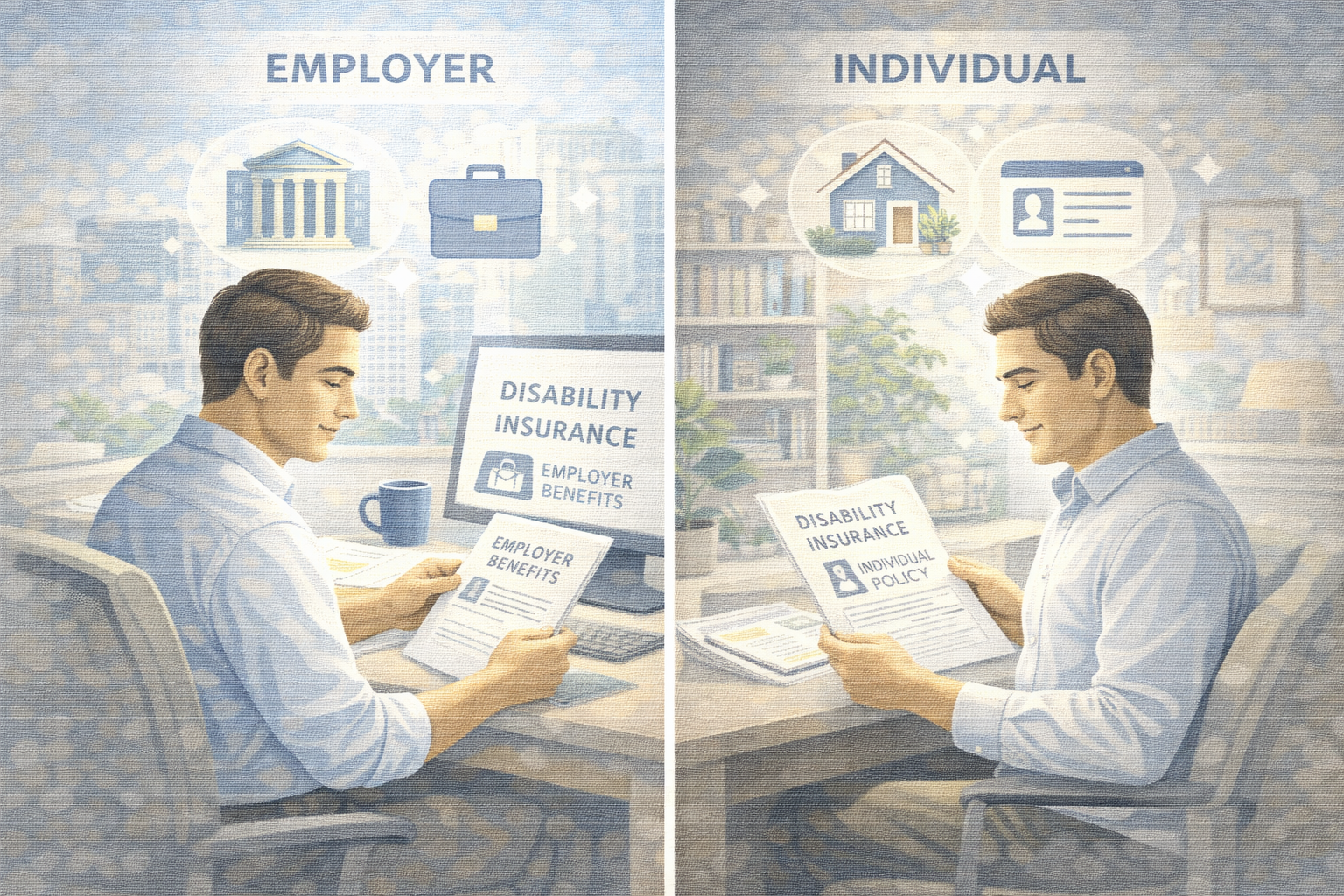
Disability insurance is designed to protect your income if illness or injury prevents you from working. In the United States, coverage usually comes from one of two sources: an employer-provided disability insurance plan or an individual disability insurance policy purchased independently.
Many workers assume employer coverage is “enough.” Others believe individual policies are only for high-income professionals. In reality, both options serve different purposes, and the best choice depends on income structure, career stability, and long-term financial goals.
This article compares employer-provided vs individual disability insurance coverage in detail—examining benefits, limitations, costs, tax treatment, portability, and who each option is best suited for.
What Is Employer-Provided Disability Insurance?
Employer-provided disability insurance is coverage offered as part of a workplace benefits package. It is usually divided into:
-
Short-Term Disability (STD)
-
Long-Term Disability (LTD)
Key Characteristics of Employer Plans
Employer disability insurance typically features:
-
Group underwriting (limited or no medical exams)
-
Lower or subsidized premiums
-
Automatic enrollment or opt-in during open enrollment
-
Standardized coverage terms
While convenient, these policies are designed for broad employee populations—not individual financial needs.
What Is Individual Disability Insurance?
Individual disability insurance is a privately purchased policy tailored to one person’s income, occupation, and risk profile.
Key Characteristics of Individual Policies
Individual disability insurance usually includes:
-
Personalized benefit amounts
-
Stronger “own-occupation” definitions
-
Policy portability (coverage follows you, not your job)
-
Long-term contract guarantees
Because they are customized, individual policies involve more underwriting and higher premiums—but offer significantly more control.
Coverage Amounts: How Much Income Is Protected?
Employer-Provided Coverage Limits
Most employer disability plans replace:
-
50%–60% of base salary
-
Often capped at a monthly maximum (e.g., $5,000 or $10,000)
Bonuses, commissions, and self-employment income are frequently excluded.
This means higher-income employees may experience a substantial income gap during disability.
Individual Policy Coverage Levels
Individual disability insurance typically allows coverage of:
-
60%–70% of earned income
-
Including bonuses or variable compensation (with documentation)
Benefit amounts are selected during application and are not subject to employer caps.
Definition of Disability: The Core Difference
Employer Plans: Any-Occupation Focus
Most employer-provided long-term disability plans define disability as:
Inability to perform any occupation reasonably suited to your education, training, or experience
This definition often becomes stricter after an initial period (e.g., 24 months).
As a result, benefits may stop even if you cannot return to your prior profession.
Individual Policies: True Own-Occupation Coverage
High-quality individual disability insurance often uses a true own-occupation definition, meaning:
-
You receive benefits if you cannot perform your specific occupation
-
You may still work in another role without losing benefits
This is particularly valuable for professionals such as physicians, attorneys, engineers, and executives.
Benefit Duration and Benefit Periods
Employer-Provided Disability Benefit Periods
Employer plans typically provide benefits until:
-
A set number of years (e.g., 5 or 10 years), or
-
Normal retirement age (less common)
Short-term disability plans usually last 3–6 months.
Individual Disability Insurance Benefit Periods
Individual policies offer flexible benefit periods, including:
-
2 years
-
5 years
-
To age 65 or 67
Longer benefit periods increase premiums but significantly strengthen income protection.
Tax Treatment of Disability Insurance Benefits
Taxation is often overlooked but critically important.
Employer-Provided Coverage Tax Rules
-
If employer pays premiums → benefits are usually taxable
-
If employee pays premiums with after-tax dollars → benefits are tax-free
Many employer plans are employer-paid, reducing the net benefit received during disability.
Individual Disability Insurance Tax Rules
-
Premiums paid with after-tax income
-
Benefits are generally tax-free
This results in higher effective income replacement compared to employer plans.
Portability and Job Changes
Employer Coverage: Not Portable
Employer-provided disability insurance:
-
Ends when employment ends
-
May require new waiting periods at new jobs
-
Often cannot be converted without reduced benefits
This creates coverage gaps during job transitions or career changes.
Individual Policies: Fully Portable
Individual disability insurance remains in force:
-
Regardless of employer changes
-
During self-employment or career breaks
-
As long as premiums are paid
Portability is one of the strongest advantages of individual coverage.
Underwriting and Approval Process
Employer Plans: Simplified Eligibility
Employer-provided disability insurance typically:
-
Requires minimal health screening
-
Accepts employees with pre-existing conditions
-
Offers guaranteed issue during enrollment periods
This accessibility is a major benefit for those with medical histories.
Individual Policies: Medical Underwriting Required
Individual disability insurance usually requires:
-
Medical questionnaires
-
Possible exams or medical records
-
Income and occupation verification
Applying earlier and while healthy improves approval odds and pricing.
Cost Comparison: Employer vs Individual Disability Insurance
Employer-Provided Cost Structure
Employer disability insurance:
-
Is often partially or fully employer-paid
-
Appears “free” or low-cost to employees
However, lower premiums often reflect reduced coverage quality.
Individual Policy Costs
Individual disability insurance premiums depend on:
-
Age
-
Health
-
Occupation
-
Benefit amount and duration
While more expensive, these policies deliver stronger protection and long-term certainty.
Who Should Rely on Employer-Provided Disability Insurance?
Employer disability insurance may be sufficient for:
-
Early-career employees
-
Individuals with health conditions limiting private coverage
-
Short-term income protection needs
However, reliance solely on employer coverage increases long-term risk.
Who Should Consider Individual Disability Insurance?
Individual disability insurance is particularly valuable for:
-
High-income professionals
-
Self-employed individuals
-
Workers with variable income
-
Anyone seeking long-term income security
For many, the optimal solution is combining both.
Employer-Provided vs Individual Disability Insurance: Side-by-Side Summary
| Feature | Employer-Provided | Individual Policy |
|---|---|---|
| Income Replacement | 50–60% (capped) | 60–70% (custom) |
| Disability Definition | Any-occupation | Own-occupation |
| Portability | No | Yes |
| Tax-Free Benefits | Often no | Yes |
| Coverage Customization | Limited | High |
| Long-Term Control | Low | High |
Final Verdict: Which Disability Insurance Coverage Is Better?
There is no universal winner in the comparison between employer-provided vs individual disability insurance coverage. Employer plans offer convenience and accessibility, while individual policies provide precision, portability, and stronger income protection.
For most U.S. professionals, employer coverage alone is not enough. Combining employer-provided disability insurance with a supplemental individual policy often creates the most resilient financial safety net.
Disability insurance is not about replacing income partially—it’s about preserving financial independence. Understanding the differences between these two coverage types allows individuals to make informed, long-term decisions.

What is Disability Insurance?
Disability insurance is a vital policy designed to protect your income if you’re unable to work due to an illness or injury. It’s crucial for ensuring that you can continue to meet your financial obligations while focusing on your recovery. Without this income protection, unexpected health issues could lead to significant financial stress.
Types of Coverage Available
There are two primary types of disability insurance: short-term and long-term coverage. Short-term disability insurance typically provides benefits for a limited period, usually up to six months. In contrast, long-term disability insurance can extend for several years or even until retirement age. Understanding the differences in coverage can help you choose the best option for your situation.
Why You Need Disability Insurance
Many people underestimate the importance of disability insurance. Statistically, there’s a significant chance that an individual may become disabled at some point during their working life. With proper income protection, you won’t have to worry about losing your lifestyle or falling behind on bills. Investing in a comprehensive disability insurance policy today can provide you and your loved ones peace of mind for the future.
Latest Posts
- Top Disability Insurance Companies 2026 | The Realistic Guide for High Earners

- Title: Why Your Disability Claim Got Denied & How to Fix It

- Are You One Accident Away From a Student Loan Nightmare?

- Disability Insurance for Global Citizens: Your Income Follows You Everywhere

- Disability Insurance Claims: 5 Insider Tips to Get Your Benefits Approved
Leave a Reply